NEW ZEALAND · SOUTH ISLAND · OTAGO

Queenstown travel guide: lake, peaks and adventure.

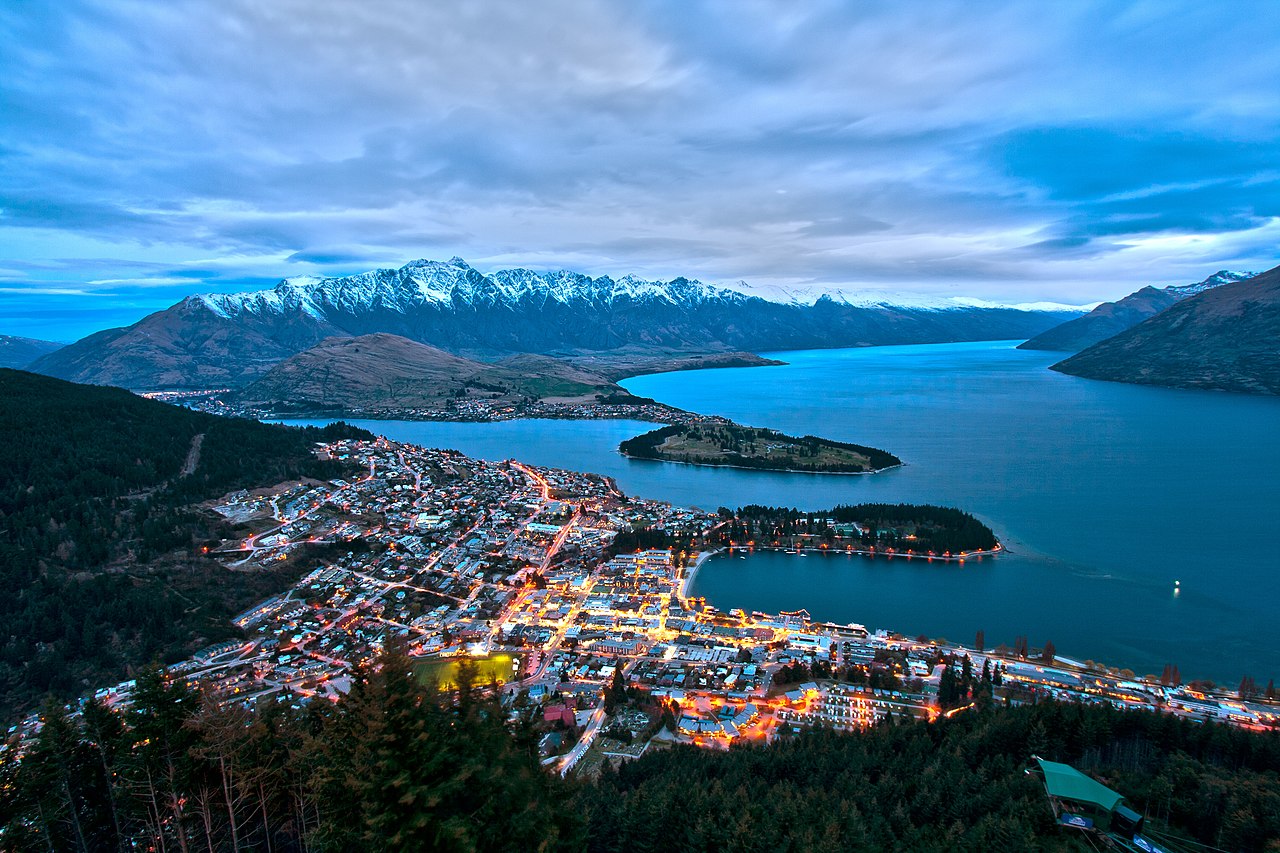
Queenstown sits on the shore of Lake Wakatipu beneath an alpine skyline that changes with the season. The town is compact, but the landscape around it opens quickly into ski fields, trails, river canyons, vineyards and long roads through the Southern Lakes.

THE REMARKABLES
QUEENSTOWN
LAKE WAKATIPU
45°S
COUNTRY New Zealand South Island
REGION Otago Southern Lakes
LATITUDE 45°S Southern Hemisphere
AIRPORT ZQN Queenstown Airport
TIME ZONE Pacific/Auckland New Zealand time

01 · READ THE PLACE

Queenstown makes more sense in four layers.

The town itself is only one part of the experience. Queenstown is best understood as a compact centre surrounded by water, mountain access and a much larger adventure region.

01

THE WATER

Lake Wakatipu

The lake gives Queenstown its orientation. The waterfront, gardens, piers and long views all work from the same edge: town on one side, water in front, mountains beyond. Even when you are not on the lake, it remains the visual centre of the place.

02

THE CENTRE

Downtown Queenstown

The central streets are compact and walkable, with restaurants, bars, shops and activity operators packed into a small area beside the waterfront. It is the easiest base if you want to move around without depending on a car.

03

THE EDGE

Frankton & the Kawarau corridor

East of the centre, Frankton connects the airport, bus network, shopping and routes toward Arrowtown, Gibbston and the wider basin. This is where Queenstown starts to feel less like a compact resort town and more like a regional hub.

04

THE HEIGHT

The mountains

Coronet Peak and The Remarkables turn winter into a major part of Queenstown's identity, while the same high country supports hiking, biking, viewpoints and scenic flights in warmer months. The mountains are not background decoration; they shape the calendar.

02 · WHY QUEENSTOWN

A small town with a large radius.

Queenstown is often described through adrenaline: bungy, jet boats, skydiving and ski fields. That reputation is real, but it can hide the more useful geographic truth. The destination works because many very different landscapes sit close enough to be combined in one trip.

You can wake beside Lake Wakatipu, spend the day on snow or trail, return to a compact town centre for dinner, and use the next day for Arrowtown, Gibbston, Glenorchy or a longer journey toward Fiordland. Queenstown is therefore less a single attraction than a highly efficient base for the Southern Lakes.

That is also why the place changes so dramatically by season. Winter concentrates attention on the mountains; summer stretches the day toward water, biking and hiking; autumn brings colour to the basin; spring can put snow on the peaks while the valley is already moving into warmer-weather activities.

03 · WHEN TO GO

Best time to visit Queenstown depends on the version you want.

Queenstown is genuinely year-round. The better question is whether you want snow, long summer days, autumn colour or the mixed conditions of spring.

DEC — FEB SUMMER

Long days by the lake

Summer is built for hiking, cycling, boating, outdoor dining and road trips. It is also a busy period, so accommodation and popular activities are worth planning earlier.

MAR — MAY AUTUMN

Colour and a slower rhythm

Cooler conditions and autumn foliage change the visual character of the region. Arrowtown is especially associated with the season, while trails and viewpoints remain central to a trip.

JUN — AUG WINTER

Snow season

Winter is the obvious choice for skiing and snowboarding. The Remarkables and Coronet Peak are the two ski areas most closely associated with Queenstown, and the town takes on a strong après-ski rhythm.

SEP — NOV SPRING

Two seasons at once

Spring can create the most interesting contrast: snow can remain at elevation while biking, golf, walking and warmer-weather activities return lower in the basin.

04 · THE QUEENSTOWN MIX

Choose your trip by terrain, not by checklist.

LAKE

Waterfront & Lake Wakatipu

Walk the lake edge, use the waterfront as your orientation point, and treat the water as more than a photo stop. Cruises, ferries and lakeside paths all reveal the shape of the basin.

HEIGHT

Bob's Peak & alpine viewpoints

Queenstown's geography becomes clearer from above. Elevated viewpoints show how tightly the town is compressed between lake, steep slopes and the wider Wakatipu Basin.

SNOW

The Remarkables & Coronet Peak

Winter visitors can build the trip around snow. The two nearest major ski areas offer very different orientations around the basin and make Queenstown one of New Zealand's key winter bases.

ADRENALINE

Rivers, canyons & bungy

Jet boating, rafting, bungy and other high-energy activities are part of Queenstown's modern identity. The important detail is that these experiences are tied to the region's rivers, cliffs and canyon terrain.

ROAD

Arrowtown, Gibbston & Glenorchy

A Queenstown trip becomes much richer once you leave the centre. Arrowtown adds heritage, Gibbston adds wine country, and the road toward Glenorchy follows one of the region's strongest lake-and-mountain corridors.

TRAIL

Walking & biking

The region supports everything from easy lakeside movement to demanding alpine days. The Queenstown Trail network is especially useful for linking landscapes without making every outing a major expedition.

05 · PRACTICAL QUEENSTOWN

Arrive compact. Explore outward.

ARRIVAL

Queenstown Airport

Queenstown Airport (ZQN) is in Frankton, about 8 km from the town centre. It handles domestic services within New Zealand and trans-Tasman flights from Australia.

AIRPORT → TOWN

Bus, taxi, rideshare or transfer

Public buses connect the airport with Frankton and central Queenstown. Taxis, rideshare and pre-booked shuttles are also available directly from the terminal.

CAR?

Not essential for the centre

Downtown is compact enough to explore on foot, and local buses cover key parts of the basin. A car becomes more useful for independent day trips and for moving beyond the core network.

STAY LENGTH

Three days is a taste. Five to seven opens the region.

A short stay can cover Queenstown's core sights. More time makes room for a ski day, Arrowtown, Glenorchy, wine country or a longer excursion without turning the trip into a race.

MOVEMENT

Use the basin, not just downtown

Central Queenstown is the easiest walking base, but Frankton, Arrowtown and other nearby areas become important once the trip expands beyond the waterfront.

PACKING

Expect rapid changes

Alpine conditions can shift quickly. Even outside winter, layers are useful; in colder months, snow and frost at elevation can be very different from conditions around the lake.

06 · QUEENSTOWN FAQ

Queenstown travel guide: quick answers.

What is Queenstown best known for?

Queenstown is best known for its alpine setting, adventure activities, Lake Wakatipu and access to skiing, hiking, biking and scenic day trips across the Southern Lakes region.

What is the best time to visit Queenstown?

June to August suits snow-focused trips; December to February suits long summer days and outdoor activities. Autumn is strong for colour and a quieter feel, while spring combines snow-capped mountains with warmer conditions below.

Do you need a car in Queenstown?

Not for a trip focused on central Queenstown. Downtown is walkable and buses connect the airport and key local areas. A car is useful if you want more freedom for day trips beyond the central network.

How many days should you spend in Queenstown?

Three days can cover the core experience, but five to seven days gives more room for mountain days, Arrowtown, Glenorchy, wine country or slower exploration of the wider region.

Is Queenstown only worth visiting in winter?

No. Winter is central to Queenstown's ski identity, but the destination is year-round. Summer, autumn and spring each change how the lake, trails, roads and mountain landscape are experienced.

07 · PLAN WITH CURRENT INFORMATION

Official Queenstown resources.