Water
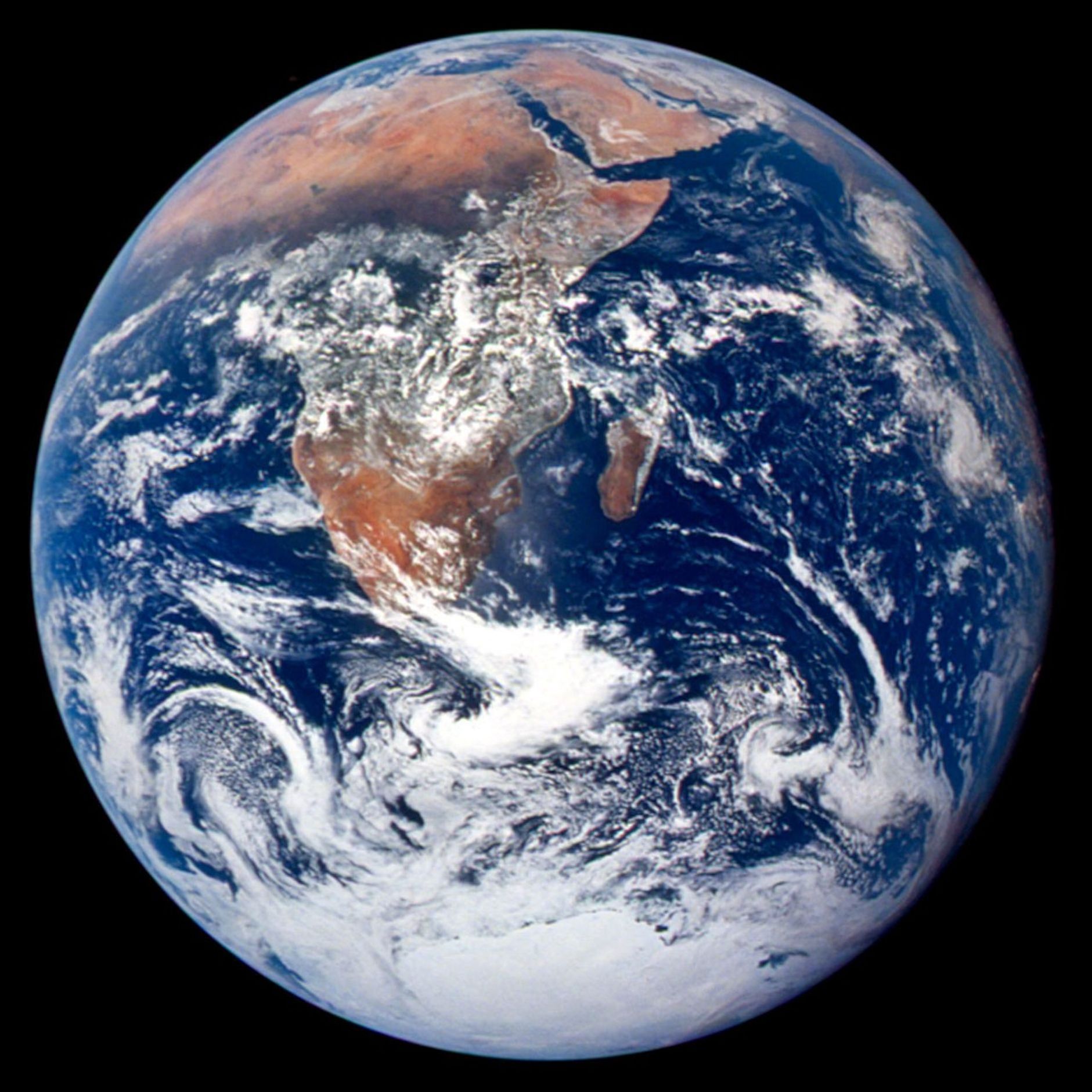
About 71% of Earth’s surface is covered by water, mostly in the global ocean.
SEEKGLOBE · PLANET EARTH
Explore essential Earth facts — from the planet’s age, size and distance from the Sun to its oceans, continents, atmosphere, gravity and the moving geological systems beneath our feet.
01 · QUICK EARTH FACTS
Earth is a rocky planet with a global ocean, a nitrogen-oxygen atmosphere and active plate tectonics. These headline figures provide a useful first orientation.
About 71% of Earth’s surface is covered by water, mostly in the global ocean.
Roughly 29% of Earth’s surface is land, spread across continents and islands.
The widely used seven-continent model includes Africa, Antarctica, Asia, Australia, Europe, North America and South America.
Earth’s equatorial circumference is approximately 40,075 kilometres.
Earth’s equatorial diameter is approximately 12,756 kilometres.
Earth orbits the Sun at an average distance of about 150 million kilometres — one astronomical unit.
Earth formed about 4.5 billion years ago from material surrounding the young Sun.
Around 300 million years ago, many of Earth’s major landmasses were joined in the supercontinent Pangaea.
02 · WHY EARTH IS UNUSUAL
Earth combines several features that make it distinctive in our Solar System: abundant surface liquid water, a substantial atmosphere, a magnetic field, active plate tectonics and a biosphere that has transformed the planet over billions of years.
The Earth facts that matter most are not isolated numbers. They work together as one planetary system.
03 · THE EARTH SYSTEM
The atmosphere, hydrosphere, solid Earth and biosphere constantly exchange energy and material. Weather, erosion, oceans and life all connect across these systems.
Earth’s atmosphere protects the surface, moves heat and water around the planet and supplies the gases used by living organisms.
Most surface water is ocean water, linking the five named ocean basins into a single planetary system.
Explore ocean basins →The solid planet is layered internally, while its outer plates move slowly enough to rearrange continents and raise mountains.
Life occupies environments from deep oceans to high mountains and has changed Earth’s atmosphere and surface chemistry.
Explore Earth timeline →04 · EARTH GEOGRAPHY
Continents, mountains, coastlines and ocean basins evolve across geological time. The familiar world map is only one moment in a much longer story.
Explore the major land regions of the modern world and where SeekGlobe destinations sit within them.
Open atlas → WATERSee how the connected global ocean is divided into Pacific, Atlantic, Indian, Southern and Arctic basins.
Explore oceans → RELIEFFollow landscapes shaped by tectonics, uplift, erosion, ice and changing climates.
Explore mountains →05 · EARTH IN MOTION
Earth rotates once in roughly 24 hours and completes one orbit around the Sun in about 365.25 days. Its tilted axis produces the annual cycle of seasons.
One day
One year
Drives the seasons
Near sea level
06 · DEEP TIME
Earth formed billions of years before complex animal life, dinosaurs, modern continents or humans. Understanding deep time makes today’s landscapes easier to place in context.
Explore the full Earth timeline →07 · EARTH FACTS FAQ
Earth is about 4.5 billion years old. Estimates come from radiometric dating of ancient material from Earth and the early Solar System.
About 71% of Earth’s surface is covered by water, while roughly 29% is land.
Earth’s equatorial diameter is about 12,756 kilometres and its equatorial circumference is about 40,075 kilometres.
Earth is about 150 million kilometres from the Sun on average. That average distance is defined as one astronomical unit, or AU.
The widely used seven-continent model recognizes Africa, Antarctica, Asia, Australia, Europe, North America and South America.
Dry air near the surface is mostly nitrogen and oxygen, with smaller amounts of argon, carbon dioxide and other gases. Water vapour varies by place and weather.
Pangaea was a supercontinent that joined many of today’s landmasses. It assembled during the late Paleozoic Era and later broke apart as tectonic plates continued to move.
KEEP EXPLORING
Follow the planet from formation to the present through major turning points in Earth history.
Explore time → ATLAS · LANDSee the world’s major land regions and the SeekGlobe destinations already mapped across them.
Open atlas → EXPLORE · PLACESMove from planetary scale to individual cities, coasts, mountains and landscapes.
Explore destinations →