THE PORT
Ancient Town
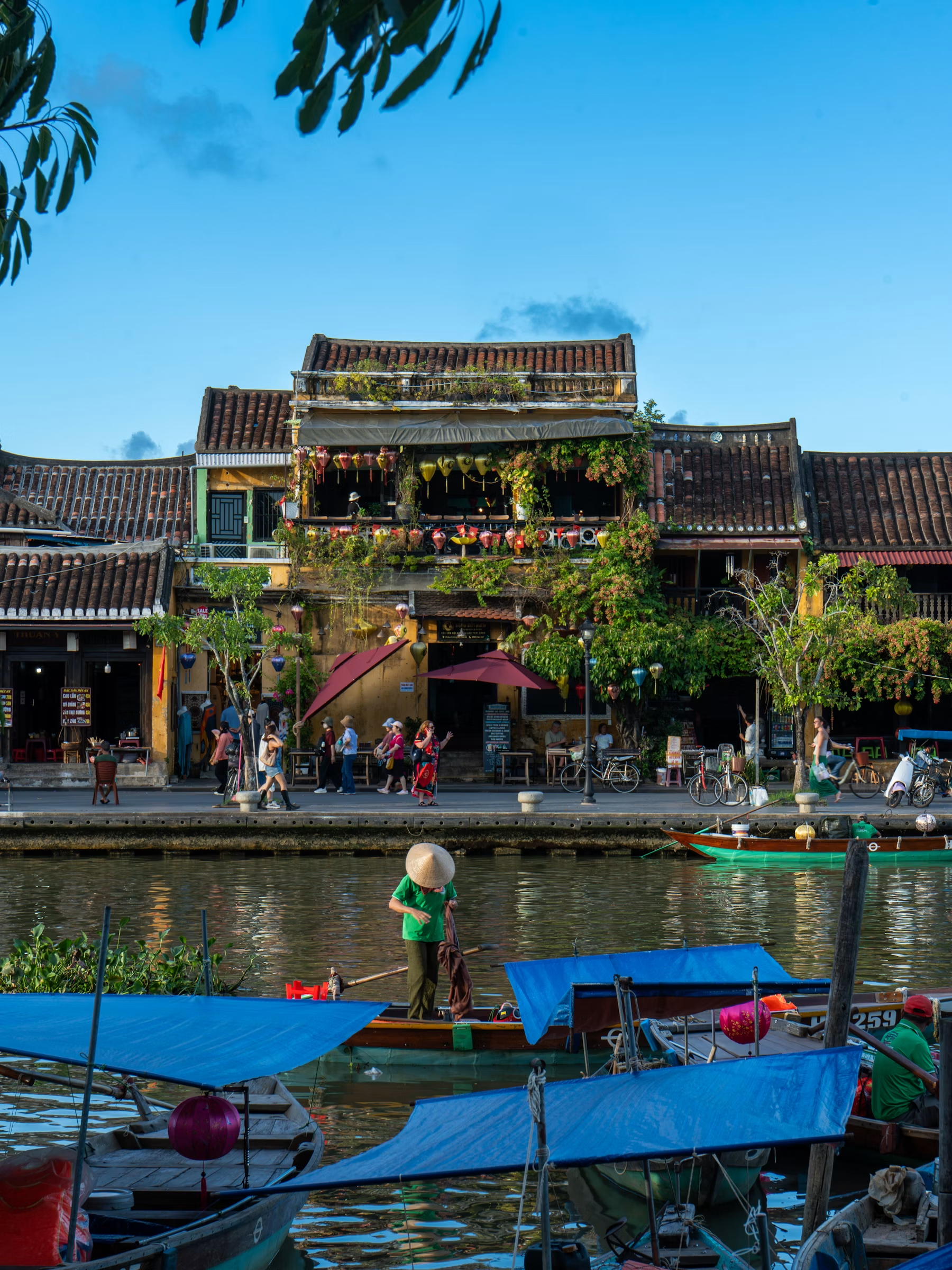
A historic trading port whose streets, timber-fronted buildings, assembly halls, old houses and Japanese Covered Bridge preserve centuries of exchange between Vietnamese, Chinese, Japanese and European influences.

VIETNAM · QUẢNG NAM · CENTRAL COAST
A preserved trading town on the Thu Bồn River, surrounded by flat countryside and only a short ride from An Bàng Beach. Hội An feels compact on a map — but every few kilometres reveal a different version of central Vietnam.
01 · UNDERSTAND HỘI AN
The Ancient Town is the centre of the story, but not the whole story. River, farmland and coast sit close enough together to become one continuous travel experience.
THE PORT
A historic trading port whose streets, timber-fronted buildings, assembly halls, old houses and Japanese Covered Bridge preserve centuries of exchange between Vietnamese, Chinese, Japanese and European influences.
THE WATER
Hội An developed because of water. The river still explains the orientation of the old town and gives the waterfront a very different character from morning to evening.
THE LOWLANDS
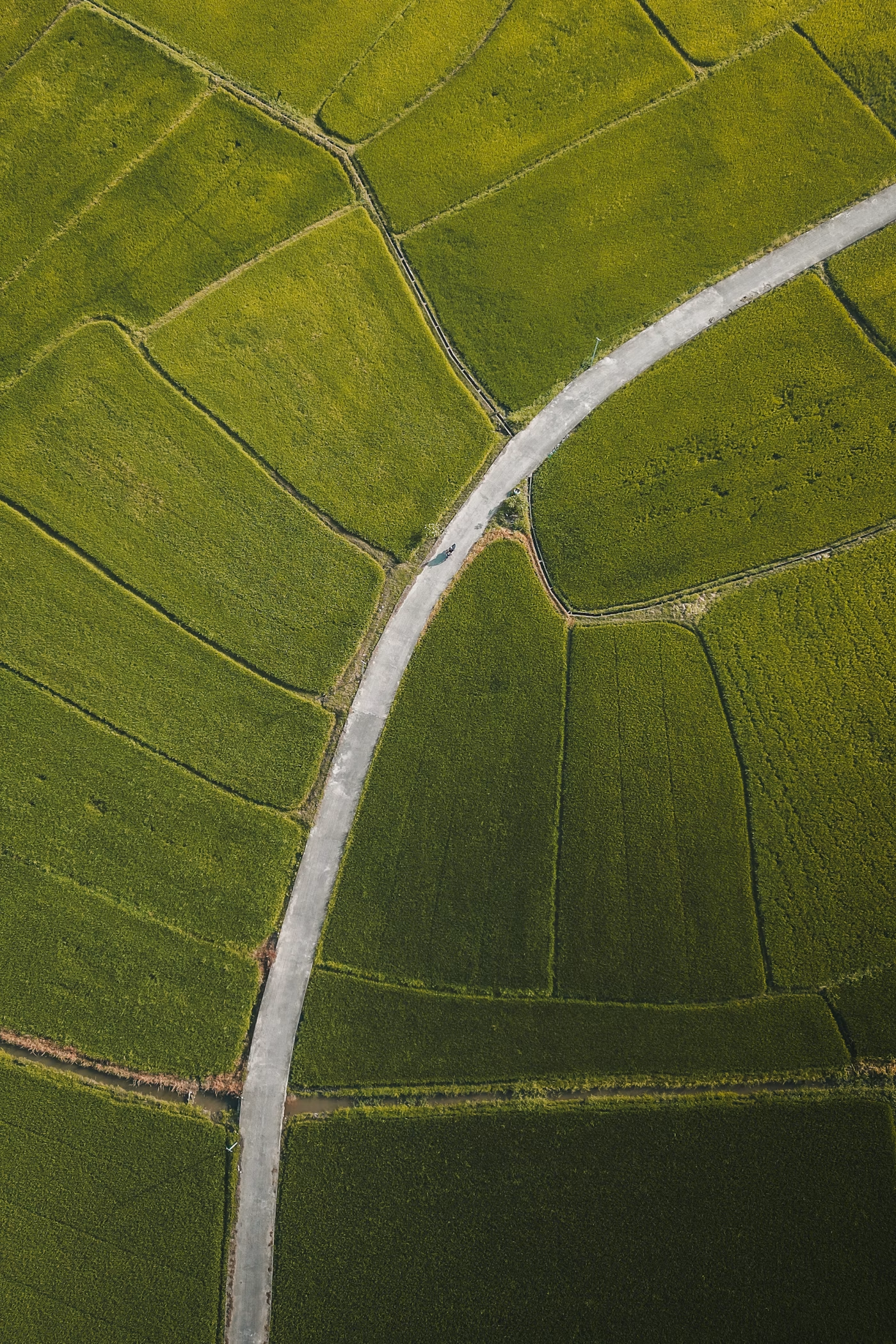
Minutes outside the centre, dense streets give way to vegetable gardens, rice paddies, ponds and narrow village roads. This transition is one of Hội An's strongest geographic contrasts.
THE COAST
A short ride east replaces the old port with sand and open sea. The beach is close enough to combine with the historic centre, yet different enough to feel like a second destination.
02 · THE OLD PORT
UNESCO describes Hội An as an exceptionally well-preserved example of a Southeast Asian trading port active from the 15th to the 19th centuries. Its survival is unusual not only because individual buildings remain, but because the relationship between street, commerce and river is still easy to read.
Walk slowly. The pleasure comes from details: tiled roofs, weathered timber, yellow walls, narrow façades, internal courtyards and the repeated movement between commercial streets and the waterfront.
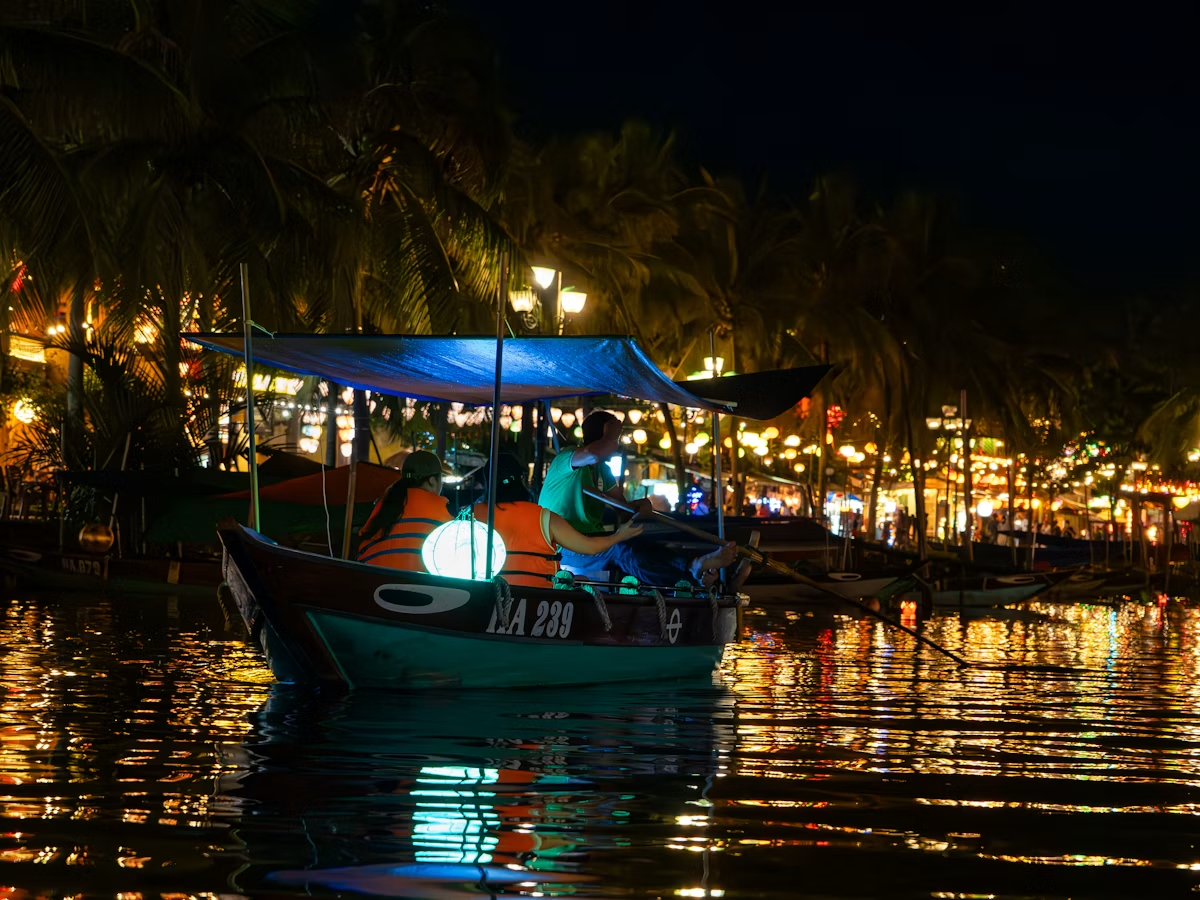
Visit the core once in daylight before seeing it illuminated at night. The architecture makes more sense first.
03 · BEYOND THE OLD TOWN
Hội An's flat surroundings make the transition into the countryside unusually accessible. Routes toward Trà Quế, Cẩm Thanh and smaller rural roads quickly move through gardens, paddies and low-lying waterways.
This matters because the old town can feel intensely visited. The countryside restores scale and quiet. It also reveals that Hội An is not an isolated historic set: it belongs to a productive landscape that reaches almost to the coast.

04 · THE COAST
After the compressed streets of the Ancient Town, the coast feels deliberately spacious. An Bàng is close enough for an afternoon escape, a beach-focused day, or a split stay between heritage and sea.
Explore the An Bàng Beach guide →05 · WHEN TO GO
Central Vietnam has a pronounced wet season. For a trip mixing the Ancient Town, cycling and the coast, conditions matter more than chasing one supposedly perfect month.
STRONGEST BALANCE
A particularly useful window for combining town walks, countryside and beach time before the hottest part of summer.
HOTTER
Beach conditions can be appealing, but daytime heat makes early sightseeing and slower afternoons sensible.
TRANSITION
Conditions begin moving toward the wetter part of the year. Flexibility becomes increasingly valuable.
WETTER PERIOD
Rain and storms are more important considerations. Check current local conditions rather than relying on a fixed itinerary.
06 · BUILD THE DAY
Walk before the busiest hours. Use the river and historic streets as anchors rather than treating the centre as a checklist.
Cycle outward. The rapid shift from heritage streets to farms and village roads is part of the experience.
Make room for regional dishes such as cao lầu and white rose dumplings instead of reducing meals to convenient stops.
Trade narrow streets for the open coast. Stay for a slower afternoon or continue through sunset.
See the town illuminated after already understanding it in daylight. The waterfront becomes the visual centre again.
Add the UNESCO-listed Cham sanctuary inland if you have enough time to explore the wider region without rushing.
07 · PRACTICAL GUIDE
Hội An has no commercial airport. Đà Nẵng is the normal gateway, followed by road transfer to the city.
The historic core is compact. Walking is not just transportation here — it is the best way to understand the urban fabric.
Flat terrain and short distances make bicycles especially useful for gardens, rice fields and communities outside the centre.
The beach is close enough for a half-day, but a full slow afternoon better matches the rhythm of the place.
Three days covers the essentials. Four or five creates room for countryside, beach time, My Sơn and repeat walks through town.
River conditions, heavy rain and storms can affect plans during wetter months. Check current local guidance before travel.
08 · QUICK ANSWERS
Hội An is best known for its UNESCO-listed Ancient Town, a remarkably preserved historic trading port whose architecture reflects Vietnamese, Chinese, Japanese and European influences.
March to May is one of the strongest periods for combining the historic centre, countryside and coast. June to August is hotter, while the final months of the year are generally wetter.
Yes. An Bàng is close enough to the Ancient Town to combine both in a single day, although giving the coast its own slower half-day usually produces a better experience.
Đà Nẵng International Airport is the main air gateway. Travellers usually continue to Hội An by transfer, taxi or ride-hailing service.
Three days is enough for the core experience. Four or five is better if you want countryside cycling, An Bàng, My Sơn and a less compressed pace.
PLAN WITH CURRENT INFORMATION
KEEP EXPLORING
Continue east from the old town to Hội An's coast.
Open guide → COLLECTIONExplore different coastlines across Asia, Europe and beyond.
Explore beaches → ATLAS · ASIASee Hội An and other SeekGlobe destinations in geographic context.
Open atlas →