
Ipanema, Copacabana & Leblon
Includes Ipanema, Copacabana, Leblon, Botafogo and Urca.
Best forBeaches, first-time visits and the Rio of postcards.

Mountains, rainforest, bay and beach are pressed into one city — which is exactly why so many visitors leave without ever understanding how it fits together. This guide starts with the shape of Rio, then the sights. Mountains, rainforest, bay and beach shape one unforgettable city. Start by understanding Rio — then explore it.
Rio wasn't built on a grid. It was built into granite mountains that drop straight into the sea — which means the city exists as a string of pockets, each cut off from the next by rock, forest or bay, and linked by tunnels and coast roads rather than straight avenues.
That's the real reason two neighborhoods that "look close" on a map can sit forty minutes apart, and why most first-time visitors only ever see one version of Rio. Locals think of the city in four zones — learn them, and Rio stops feeling like a maze.
Every neighborhood on this page is grouped by which of these areas it belongs to — so once you know the zones, the rest of the city starts to make sense.
Includes Ipanema, Copacabana, Leblon, Botafogo and Urca.
Includes downtown Centro, the Lapa nightlife district and hillside Santa Teresa.
Includes the Tijuca National Forest, Maracanã stadium and the residential North Zone.
Includes Barra da Tijuca, Recreio and the western coastline.

In most cities, geography is a backdrop. In Rio, it's the main character. Granite peaks push straight up through residential streets. Rainforest edges into backyards. The Atlantic laps against a promenade that runs, almost unbroken, for miles.
Rio's nickname — "Cidade Maravilhosa," the Marvelous City — isn't marketing. It's a description of what happens when mountain, forest, bay and beach all compete for the same skyline.
That collision is also why Rio rewards a little orientation before you arrive: a beach afternoon, a forest hike, a colonial stairway and a football stadium can all happen in the same 48 hours — if you know where each one sits.
Six essentials to start with — each one tagged by the zone it belongs to, so you can group your days by area instead of criss-crossing the city.

Rio's defining silhouette, reached by cog train through the Tijuca Forest — arrive early to beat the clouds and the crowds.

A two-stage cable car ride for the best sunset panorama of the bay.

The city's most iconic sand, and its best sunset-watching rock.


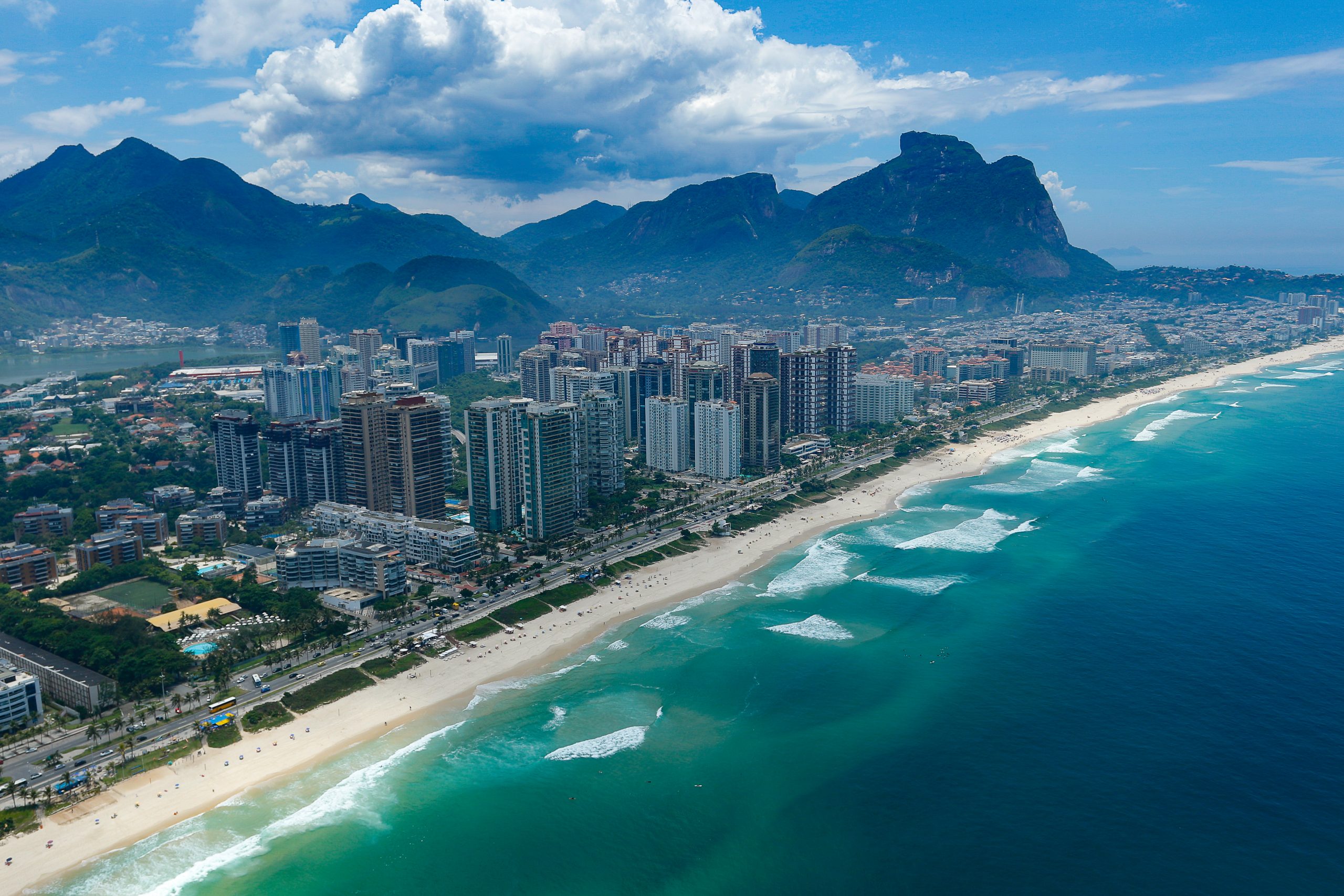
Rio's newer, calmer, car-friendly coastline.
Copacabana to Ipanema, along the wave-pattern calçada — flat, scenic, and free at any hour.
Locals applaud when the sun drops behind the Two Brothers — arrive 30 minutes early for a spot.
253 tiled steps in Lapa, covered in mosaics from over 60 countries.
Follow it on foot through cobbled, hillside streets lined with street art and colonial houses.
Open-air rodas de samba appear around Lapa and Pedra do Sal most weekends — no ticket required.
Hot, festive, Carnival season (Feb or Mar). Rio at its most crowded.
Warm and noticeably quieter, with fewer beach crowds.
Rio's driest, coolest stretch — good for hiking Tijuca and Corcovado.
Spring warmth returning, before the summer crowds arrive.
Rio is wide and mountain-divided, so where you sleep shapes your whole trip. Match your priority to an area below, then narrow down from there.

Walkable, upscale and steps from the sand — the easiest base for a first trip.

The widest choice of hotels on one beachfront, from hostels to five-star.

Residential, well-connected by metro, with Sugarloaf views and calmer streets.

Boutique guesthouses on cobbled hillside streets, close to Lapa's nightlife.
Galeão International (GIG) handles most international arrivals, about 40 minutes from the South Zone.
Santos Dumont (SDU), right on the bay, serves domestic and short-haul routes — much closer to Centro and Botafogo.
The Metro (Lines 1 and 2) covers Centro, Botafogo, Copacabana and Ipanema well and is the easiest way to avoid traffic.
Ride-hailing apps are widely used and generally the safest way to move at night, especially between zones.
4–5 nights covers the South Zone properly, plus a day each in Central Rio and the Tijuca / North Zone.
Add extra nights only if Barra and the West Zone, or a day trip beyond the city, are on your list.
Instead of zig-zagging across the city chasing a checklist, each day here stays inside one or two neighboring zones — less time in transit, more time in Rio.


